Modifications
Threshold Ramps: The Simplest Accessibility Fix
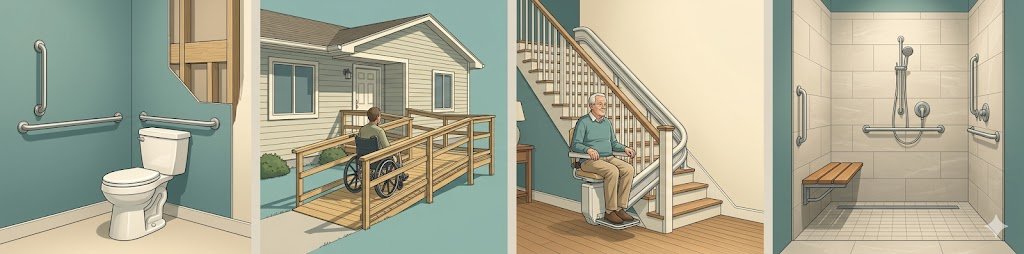
Updated June 2025 — No permit, fast install, major impact
What a Threshold Ramp Does
Door thresholds — the raised strip at the bottom of a door frame — are one of the most common fall hazards and mobility barriers in residential settings. A threshold ramp creates a gentle slope over the threshold, allowing wheelchairs, walkers, and unsteady walkers to cross smoothly. They are the smallest, simplest, and least expensive accessibility modification available.
Measuring for the Right Height
Measure the height of your door threshold from the finished floor to the top of the threshold. This is the ramp height you need. Common threshold heights: interior thresholds 1/2–1 inch; exterior thresholds 1–3 inches; sliding door tracks 1–4 inches.
Materials
- Rubber: Most common; durable, non-slip, available in many heights (1/2"–2.5"); good for interior and exterior; $20–$60
- Aluminum with rubber surface: Longer lifespan; better for higher thresholds (up to 4"); $40–$120
- Wood (custom-built): For unusual dimensions; can be painted to match; requires DIY or carpentry skill
Installation
Most threshold ramps simply sit in place against the threshold, held by the door when it's closed and by friction/weight when open. Many include adhesive strips for a more secure installation. No tools, no permits, no structural work required.
Recommended Product
Moen Home Care 32” Stainless Steel Grab Bar
The most widely specified residential grab bar among CAPS contractors and VA-approved installers. Stainless steel, concealed screws, available in multiple lengths and finishes. $24.48 — 300+ purchased last month.
View on Amazon →As an Amazon Associate, AccessReadyHome earns from qualifying purchases at no extra cost to you.